This is a week where I have been heartily wishing that we hadn’t switched to the Narrative Lectionary! Even after doing A LOT of research, I was still wishing that. But part of the reason we made the decision to switch was so that we read passages like what you’re going to hear in a minute. Passages that aren’t warm and fuzzy… passages that you might not even realize are in the Bible.
I think it’s partly because of what is going on in Israel/Palestine right now. While I think I would be deeply troubled by it at any time, the fact that I was less than a week away from getting on a plane to Tel Aviv has made the violence and destruction consume me in a way that is different than say the Russian invasion of Ukraine did. And of course, these sacred stories of ours an embedded on the land of Biblical Israel… a country that was created after the second world war.
Let’s listen as the story unfold in 1 Kings 12: 1-17, 25-29:
12 Rehoboam went to Shechem, where all the people of northern Israel had gathered to make him king. 2 When Jeroboam son of Nebat, who had gone to Egypt to escape from King Solomon, heard this news, he returned from[a] Egypt. 3 The people of the northern tribes sent for him, and then they all went together to Rehoboam and said to him, 4 “Your father Solomon treated us harshly and placed heavy burdens on us. If you make these burdens lighter and make life easier for us, we will be your loyal subjects.”
5 “Come back in three days and I will give you my answer,” he replied. So they left. 6 King Rehoboam consulted the older men who had served as his father Solomon’s advisers. “What answer do you advise me to give these people?” he asked.
7 They replied, “If you want to serve this people well, give a favorable answer to their request, and they will always serve you loyally.”
8 But he ignored the advice of the older men and went instead to the young men who had grown up with him and who were now his advisers. 9 “What do you advise me to do?” he asked. “What shall I say to the people who are asking me to make their burdens lighter?”
10 They replied, “This is what you should tell them: ‘My little finger is thicker than my father’s loins!’ 11 Tell them, ‘My father placed heavy burdens on you; I will make them even heavier. He beat you with whips; I’ll flog you with bullwhips!’”
12 Three days later Jeroboam and all the people returned to King Rehoboam, as he had instructed them. 13 The king ignored the advice of the older men and spoke harshly to the people, 14 as the younger men had advised. He said, “My father placed heavy burdens on you; I will make them even heavier. He beat you with whips; I’ll flog you with bullwhips!” 15 It was the will of the LORD to bring about what he had spoken to Jeroboam son of Nebat through the prophet Ahijah from Shiloh. This is why the king did not pay any attention to the people.
16 When the people saw that the king would not listen to them, they shouted, “Down with David and his family! What have they ever done for us? People of Israel, let’s go home! Let Rehoboam look out for himself!”
So the people of Israel rebelled, 17 leaving Rehoboam as king only of the people who lived in the territory of Judah.
Now, there is a lot of confusing names and places in that passage, so I don’t blame you if you tuned out a bit of got mixed up between Rehoboam and Jeroboam. Really, why did they have to be so close in name?
In listening to the Bibleworm podcast on this text, one of the hosts pointed out that in the first verse, we are at a coronation… all the people of the Northern Israel had gathered to make him king… but they basically say, “Wait a minute… unless you ease up our burdens… we will not be your loyal subjects.” They likened it to King Charles recent coronation… imagining that in the middle of the ceremony, some of the people who had swear loyalty started to bargain…
This is Solomon’s son… and they say that Solomon “treated us harshly and placed heavy burdens on us.” This is a key phrase… it’s the same wording that was used in Exodus about how Pharoh treated the Hebrew slaves… the oppressed had become the oppressor. Taxing them beyond reason to build up palaces and personal wealth. Hmm… does that sound familiar?
So, King Rehoboam consulted his father’s advisors who said to deal with them fairly in return for their loyalty. He then consulted the young men he grew up with who said, “This is what you should tell them: ‘My little finger is thicker than my father’s loins!’ ‘My father placed heavy burdens on you; I will make them even heavier. He beat you with whips; I’ll flog you with bullwhips!’” Talk about your young men posturing? Doesn’t that sound like locker room talk?
And so the kingdom was divided… King Rehoboam in the south and King Jereboam in the north. A reign that had seen those famous and flawed kings rule over a united kingdom: Saul, David, and Solomon. But brutality and greed cannot be the guiding force of any institution for long… especially one that professes to be from God.
So, am going to leave you with a few questions:
• In 1 Kings 12:1-17, Rehoboam’s leadership decisions lead to division and conflict among the people. How can this story remind us of the importance of wise and considerate leadership in our families, communities, and workplaces today?
• The people’s request for relief from heavy burdens and taxes in 1 Kings 12:4 reflects a common human desire for fairness and justice. How can we apply this principle to our own lives and advocate for justice and fairness in our society?
• How might the lessons from this passage encourage us to seek reconciliation and unity when faced with division, both in our personal relationships and in the broader context of our world?
• In the light of this passage, what can we learn about the long-term consequences of our decisions and the importance of making choices that honor God and promote the well-being of others in our contemporary society?
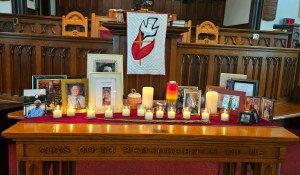
Now, I would be the last person to say that only our ‘elders’ have wisdom, I know some very wise people who are younger than me and have much to offer me. I am younger than many of you and hope you believe that I have wisdom to offer you. And you who are the wise elders of this congregation, I hope together we make faithful decisions for the future. As we have marked this All Saints Day, thanks be to God for the challenge and the opportunity of being faithful in the world today, amen.
1 Kings 12: 1-17
October 29, 2023 – SJ
© Catherine MacDonald


 My Window on God's World