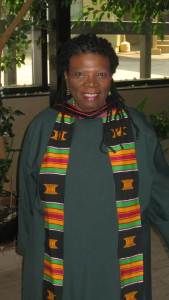
More than 30 years ago, the Rev. Eleanor Scarlett arrived at Cole Harbour United Church as an intern. I was on her Lay Supervision Team, the group set up to support and evaluate her over the 8 months with us. She came to us from Toronto, after emigrating from Jamaica, she was had been a nurse who felt a call to ministry. Her 8 months with us was rewarding, challenging and eye opening and frustrating. She introduced me to jerk chicken, a dish I still love! She had an accent, which we had to intentionally ‘tune’ our ears to, which got much easier with time. She had completely different life experiences than the people of Cole Harbour United.
And when she tried to tell us, her Lay Supervision Team, of instances of racism that she was encountering in Nova Scotia, I’m afraid that we dismissed them as individual acts and not the systemic issues that they really are. I know that I distinctly remember thinking something along the lines of, “I have not personally witnessed acts of racism, so therefore racism does not exist.” I, and we, dismissed her lived experience as a Black person. Please remember, I was much younger then! And had much to learn.
For a long time, in Canada and in the United Church, we have not listened to those who live with racism. We have patted ourselves on the back and compared ourselves favourably to the racism that exists in the United States. As if racism of a more subtle sort is okay. We can no longer close our ears to their stories or our eyes to the injustice they experience.
But… and this is a big but… the story of African people in Nova Scotia is not just one of victimization, it is a story of resilience and strength. And they have much to teach us about living through times when the forces of evil seem to be all around!
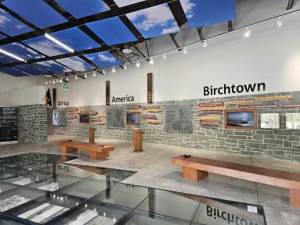
Last summer, my husband and visited the Black Loyalist Heritage Centre in Birchtown, and if you haven’t been, I really encourage you to make the trip. We made it a mini getaway and stayed overnight in Shelbourne. The picture on the left is the main room of the museum and you see the words from left to right: Africa, America, Birchtown.
This next picture gives you a timeline.
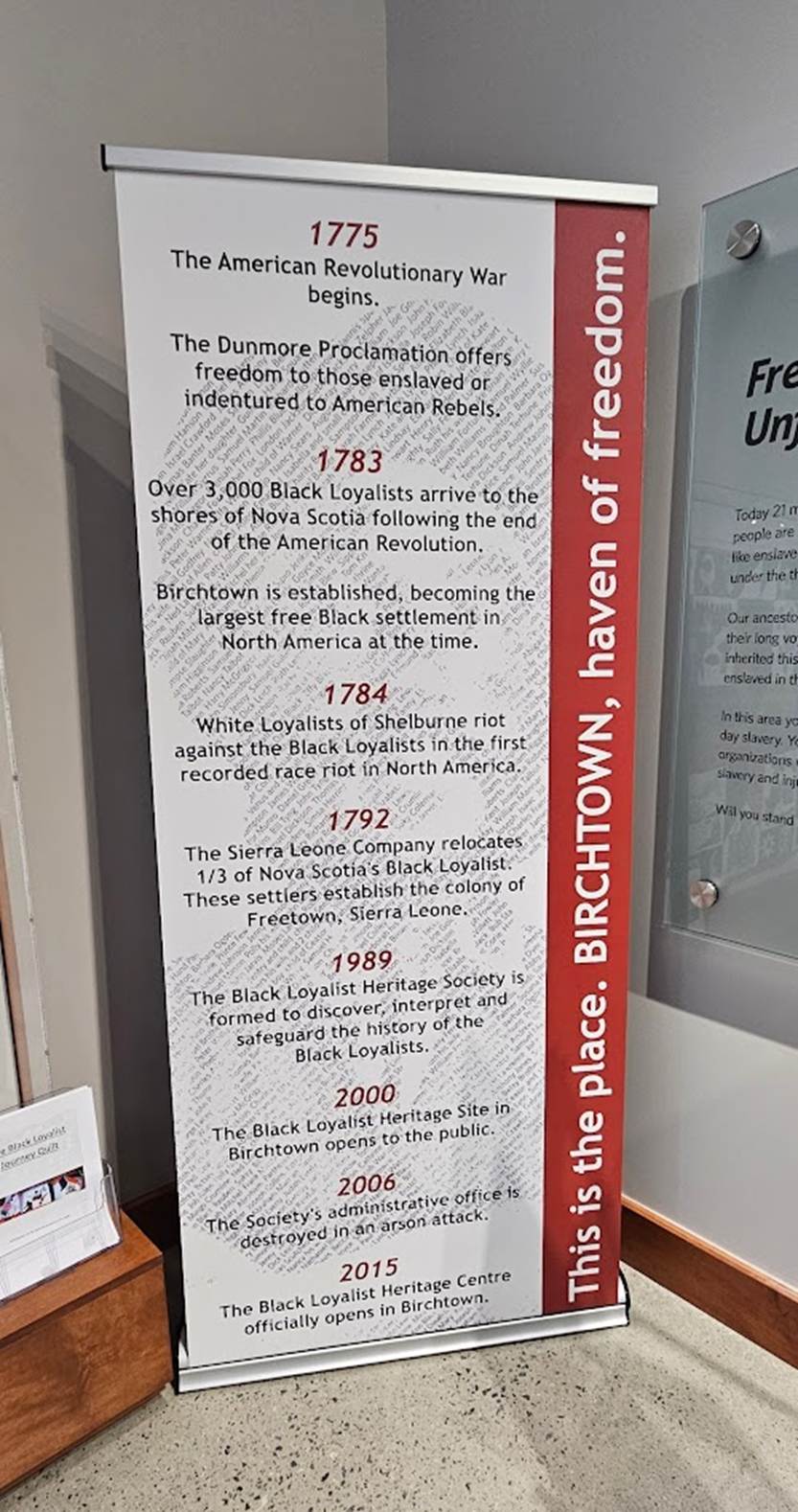
This story was made famous by writer Lawrence Hill in The Book of Negroes and later screen adaptation. Black Loyalists were promised freedom and land in Nova Scotia after fighting on the side of the British King. And so while they weren’t exiled in the same way as the people in the reading from Jeremiah, there are similarities.
Jeremiah 29 meets us in a moment when people are desperate for good news and tempted by easy promises. Writing to a community torn from home and certainty, Jeremiah does not offer escape or a fast fix. Instead, he speaks a bracing word of faith: settle in, build real lives where you are, love your children into the future, and seek the wellbeing of the very place you never wanted to be. This is not resignation; it is resilient hope. God’s promise is not that disruption will be brief, but that presence will be faithful.
“I know the plans I have for you” is not a slogan for individual success, but a covenant promise to a wounded people that their story is not over. Even in exile, even in seasons of loss or transition, God is still shaping a future rooted in justice, community, and shalom. Let’s listen to those ancient words now:
4 Thus says the Lord of hosts, the God of Israel, to all the exiles whom I have sent into exile from Jerusalem to Babylon: 5 Build houses and live in them; plant gardens and eat what they produce. 6 Take wives and have sons and daughters; take wives for your sons, and give your daughters in marriage, that they may bear sons and daughters; multiply there, and do not decrease. 7 But seek the welfare of the city where I have sent you into exile, and pray to the Lord on its behalf, for in its welfare you will find your welfare. 11 For surely I know the plans I have for you, says the Lord, plans for your welfare and not for harm, to give you a future with hope.
The black people who arrived in Nova Scotia were in their second exile, torn from Africa, enslaved in a foreign land, and now promised something by the British crown that was never delivered. Land, freedom and dignity. They got land, marginal land, and as you heard in the timeline, not without a fight. They claimed dignity and freedom and against all odds, survived and thrived! And are here today to tell the story of resilience against almost insurmountable odds. That resilience is not abstract. It has a voice. And in Nova Scotia, one of those voices belongs to El Jones, former Poet Laureate of Nova Scotia:
This is part of her Halifax Proclamation
They tell us our Black lives don’t matter
They say we’re small and we’re scattered
They think we’ll stay down because they think we are battered
They don’t teach us our history and we never get added
So they don’t know our power whenever we gather
In double the languages
Bigger than all of us in here together
We’re used to a pattern of being excluded
But there will be nothing without us included
And we can’t be held back when we’ve fought off our chains
Our declarations they ring with the voice of the slave
From the ones who escaped
From the unmarked graves
From the ships and the sails
So when we carry them forward our backs they don’t break
We are used to the weight, but we’ll no longer wait
So tell Parliament Hill it’s our time to be great
Tell the senate we will, you can tell the whole state
We’re not a seat at your table, we’re here to redecorate
And the Halifax Declaration is what we create
When we’re unified and collective like the call from the trumpet
We’ve been in the depths and we’ve seen our dreams plummet
But we know we’ll ascend and we will see the summit
For our time has come, our time it has come
Our time it has come but we are not done yet.
Most of you know by now that I’m a word nerd, I’d rather read something than watch a video about it. There are a multitude of African/Black authors that write fiction and nonfiction about the Canadian experience. (See the end for a short, non-exhaustive list) These authors and works don’t simply describe resilience as toughness alone; they show it as rooted in community, memory, identity, resistance to erasure, and the creation of joy and hope despite systemic hardship. Their writing reminds us that resilience is not merely surviving, but claiming space, narrating one’s own story, and building community even when structures refuse justice.
People of African descent had their own religions stripped away from them and were forced to adopt Christianity. But not the Bible as we know it, special slave Bibles.
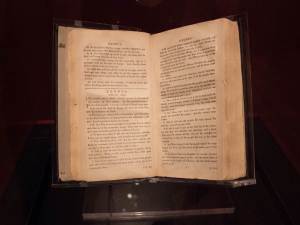
On display now at the Museum of the Bible in Washington, D.C., is a special exhibit centered on a rare Bible from the 1800s that was used by British missionaries to convert and educate slaves. What’s notable about this Bible is not just its rarity, but its content, or rather the lack of content. It excludes any portion of text that might inspire rebellion or liberation. “About 90 percent of the Old Testament is missing [and] 50 percent of the New Testament is missing,” Schmidt says. “Put in another way, there are 1,189 chapters in a standard protestant Bible. This Bible contains only 232.”
Schmidt says passages that could have prompted rebellion were removed, for example: “There is neither Jew nor Greek, there is neither bond nor free, there is neither male nor female: for ye are all one in Christ Jesus.” Galatians 3:28
And verses that reinforced the institution of slavery, including “the most famous pro-slavery verse that many pro-slavery people would have cited,” says Schmidt, were kept.
“Servants, be obedient to them that are your masters according to the flesh, with fear and trembling, in singleness of your heart, as unto Christ.” Ephesians 6:5 https://www.npr.org/2018/12/09/674995075/slave-bible-from-the-1800s-omitted-key-passages-that-could-incite-rebellion
That passage from Galatians 3 is one of radical inclusion and equality. It’s one of Paul’s earliest letters and was written into a church arguing about who really belongs, and Paul responds by pointing not to rules or markers of respectability, but to baptism. In a world obsessed with hierarchy, he dares to say that identity in Christ outruns every category used to divide and rank human lives. Jew and Greek, enslaved and free, male and female do not disappear, but they lose their power to determine worth or access to God.
This is not abstract theology. It is a claim meant to be lived out in shared meals, shared leadership, and shared dignity. Paul insists that the promise of God was always meant to be this wide, and that the church becomes most faithful not when it protects boundaries, but when it practices a belonging that mirrors God’s own radical generosity.
With that as a backdrop, let’s listen to those words again:
26 for in Christ Jesus you are all children of God through faith. 27 As many of you as were baptized into Christ have clothed yourselves with Christ. 28 There is no longer Jew or Greek; there is no longer slave or free; there is no longer male and female, for all of you are one in Christ Jesus. 29 And if you belong to Christ, then you are Abraham’s offspring, heirs according to the promise.
That is precisely the kind of text that enslavers feared, and the kind of promise that sustained hope. Jesus is the great equalizer…Then and now. So where does that leave us, here and now? Jeremiah calls us to build home even when the ground beneath us feels uncertain. Paul reminds us that in Christ, no hierarchy gets the final word. And the story of African peoples in Nova Scotia shows us what that looks like when faith is lived with courage, creativity, and stubborn hope.
Seeking freedom is not only about breaking chains; it is about building communities where dignity is practiced, stories are honoured, and everyone has a place to belong.
This African History Month, we are invited not just to remember resilience, but to learn from it. To listen more deeply. To widen our tables. To seek the welfare of the place where we live, knowing that our own flourishing is bound up with one another’s. In Christ, the promise is still unfolding. And we are called, together, to help make it visible.
Thanks be to God for the challenge and the opportunity, amen.
Jeremiah 29:4–7, 11
Galatians 3: 26-29
February 8, 2026 – SJ
African History Month
Fiction & Memoir With Resilience Themes
Lawrence Hill – A major Canadian novelist and memoirist whose The Book of Negroes tells a sweeping story of Black Loyalists and survival across continents, and whose nonfiction Black Berry, Sweet Juice explores identity and belonging. His work is powerful in showing resilience across history and personal experience.
Addena Sumter-Freitag – A Black Canadian poet and performer whose work, including Back in the Days and her one-woman show Stay Black & Die, uses storytelling and poetry to reflect on growing up Black in Canada and the perseverance embedded in that journey.
David Chariandy – Though not exclusively described as “resilience writing” in sources, his fiction (e.g., Brother) tenderly examines family, loss, identity, and the strength required to face social and systemic challenges in diasporic Black communities.
✦ Poetry, Stories & Collective Voices
AfriCANthology: Perspectives of Black Canadian Poets – An anthology that brings together Black Canadian poetic voices, capturing personal journeys of struggle, resistance, and triumph through verse and prose.
Spoken-word and community pieces by poets and writers like Randell Adjei, Dwayne Morgan, and Faduma Mohamed highlight resilience as lived experience—fighting for equity and joy despite systemic challenges.
✦ Historical & Community-Focused Work
The ABCs of Black Stories in Canada – A collection designed to share stories of Black resilience, courage, and compassion across Canadian history, ideal for younger readers or groups exploring Black achievement and perseverance.
Books such as Africville: An African Nova Scotian Community Is Demolished—and Fights Back chronicle real community resilience in Halifax through grassroots resistance, loss, and later recognition.
© Catherine MacDonald 2026


 My Window on God's World