This morning you are going to hear a short piece of scripture about small things, tiny things, that wind up having an impact far beyond what you would imagine. Things that grow more or less wild… that are untameable… unpredictable… and Jesus likens them to the Kingdom of God. You can see them on the communion table; there are mustard seeds and yeast. They look pretty placid don’t they… nothing about them appears to be disruptive or having much of an impact. But… a friend loaned me his book on parables when I told him I was doing a series on them after Easter. Sunday afternoon I discovered WAY more about agriculture in the time of Jesus than I ever dreamed I would! Before I get into some of what I learned, let’s listen to the scripture reading. It’s written in Matthew 13:
31 He put before them another parable: “The kingdom of heaven is like a mustard seed that someone took and sowed in his field; 32 it is the smallest of all the seeds, but when it has grown it is the greatest of shrubs and becomes a tree, so that the birds of the air come and make nests in its branches.” 33 He told them another parable: “The kingdom of heaven is like yeast that a woman took and mixed in with three measures of flour until all of it was leavened.”
The book is called Hear Then the Parable by Bernard Brandon Scott and he argues that Jesus used parables to provoke thought and challenge conventional wisdom rather than simply explain ideas. He notes that Jesus did not usually interpret his own parables, and many explanations were likely added later by others. Using the parable of the mustard seed as an example, Brandon compares its four versions (Matthew, Mark, Luke, and the Gospel of Thomas) and believes Luke preserves the earliest form, closest to Jesus’ original words. A key difference among versions is whether the mustard seed grows into a shrub with branches or into a tree.He explores the symbolism of mustard as something closer to a weed than a cultivated plant—spreading uncontrollably and resisting human control. This suggests that the Kingdom of God may be like an invasive, disruptive force that unsettles those in power.
Similarly, yeast had mostly negative associations in first-century Judaism because it spreads unseen and ferments unpredictably, yet Jesus uses it positively to describe God’s kingdom. One of the reasons yeast was considered to be bad was because unleavened bread was good and associated with the exodus to freedom.
Brandon also connects this to Jewish purity laws, such as keeping seeds separate, noting that mustard was even discouraged in later Jewish tradition because it spread too aggressively. This makes mustard a symbol of something subversive to orderly systems. Finally, Brandon suggests Jesus may have used exaggeration and humor, common in oral storytelling, by describing mustard growing into a mighty tree. His Jewish audience would have recognized the joke and deeper meaning: God’s kingdom begins small and hidden but grows in surprising, uncontrollable, and disruptive ways.
Brandon chose the unlikely version of mustard seed to tree because trees were symbols of top-down empire – All things Jesus opposed as the way change happens.
Salvation would not come from replacing Roman overlords with Jewish ones. (Summarized from a sermon written by the Rev. Phillip Kennedy – Used with permission)
I’m highlighting four stories this morning of holy disruption of the status quo.
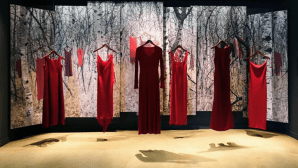
Because Tuesday is Red Dress Day, I want to highlight that first. May 5th, known as Red Dress Day, honours Indigenous women, girls, and Two-Spirit people who have gone missing or experienced violence, often without justice. It began in 2010 through Métis artist Jaime Black and her REDress Project, which used empty red dresses to symbolize those lost and raised awareness of the high rates of violence faced by Indigenous women. Since then, the movement has spread internationally, with people wearing red dresses or ribbons on May 5th to remember victims, stand in solidarity, and support justice and the Calls to Justice from the 2019 National Inquiry Into Missing and Murdered Indigenous Women and Girls.
Holy disruption of the status quo.
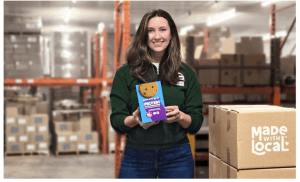
Made with Local was founded in 2012 by Sheena Russell after she recognized a need for tasty, sustainable snacks made with simple, recognizable local ingredients. Drawing on her home kitchen experience and farm roots, Russell wanted to prove that snacks could be both delicious and responsibly made while supporting Canadian farmers and producers. What began as a small side project quickly gained popularity at local farmers’ markets, where customers were drawn to the nourishing bars and the company’s strong community values.
As demand increased, the company looked for ways to grow without losing its commitment to quality and sustainability. In 2015, Made with Local partnered with The Flower Cart, a social enterprise that helped expand production while creating positive community impact. This partnership allowed the business to scale up responsibly and stay true to its mission.
Back in 2022, I too a couple of Masters courses in Social Enterprise and these two companies were someone’s project presentation! That same year, the company opened its own 8,000-square-foot manufacturing facility in Windsor. Russell described this move as transformational for the business. Today, Made with Local products are sold in thousands of stores across Canada, including Costco and Sobeys, while continuing to proudly use Canadian ingredients from farmers nationwide.
Holy disruption of the status quo of cheap, imported ingredients!
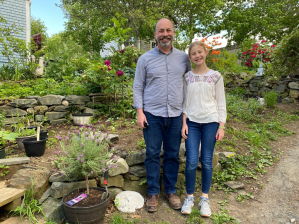
Milkweed Project A 12-year-old girl from Dartmouth, Nova Scotia, Vanessa Burchill, is helping endangered monarch butterflies by growing and giving away milkweed plants, the only plant monarchs use to lay eggs. Inspired after seeing a butterfly emerge from a chrysalis, she began her conservation effort about three years ago. She began growing milkweed plants to help endangered monarch butterflies. This small initiative grew into a large community effort in 2021, with her giving away hundreds of plants to residents across the Halifax region. Through her Downtown Dartmouth Monarch Project, Vanessa has distributed around 1,000 swamp milkweed seedlings across the Halifax region.
She starts the plants indoors under grow lights in winter, then moves them outside as they grow. People can collect free pots of milkweed from her home to plant in sunny garden spots that support monarch development. Vanessa’s own yard has been certified as a wildlife-friendly habitat and is full of pollinator-friendly plants and animals. She has also helped create a community pollinator garden in a nearby park with neighbours.
Holy disruption of the status quo that youth have no power or capacity to make change.
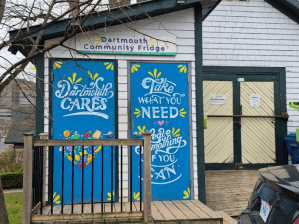
The Dartmouth Community Fridge was launched in May 2022 as a resident-led response to rising food costs and growing food insecurity in downtown Dartmouth. Led by longtime resident Lisa Scott and other volunteers, the goal was to create a barrier-free food access system where people could get fresh food without judgment, registration, or limited hours. A small weather-resistant shelter containing a fridge and pantry was built at Christ Church on Dundas Street, with materials and labour donated by Bruno Builders. The initiative also received key support from the Public Good Society of Dartmouth and Christ Church, which provides the location and electricity.
The project began because of a combination of rising grocery prices, limited food bank hours, and a desire to offer people dignity and choice through a “take what you need, leave what you can” model available 24/7. Since starting with one fridge and a shelf, the program has grown substantially. By late 2025, it was spending about $6,000 monthly to supplement donations and was supported by more than 60 active volunteers who restock it several times a day.
Holy disruption of the status quo by offering dignity and choice to neighbours.
These stories show that real change does not have to begin with wealth, power, or recognition. It often starts with one person noticing a need and choosing to act. That is the heart of Matthew 13:31–33, but there is something even more unsettling in Jesus’ images than we sometimes admit. The mustard seed and the yeast are not just symbols of growth. They are wild, disruptive forces. Mustard, in Jesus’ time, was not a tidy garden plant. It spread aggressively, taking over fields where it was not always welcome. It resisted control. And yeast, in a culture where leaven was often associated with impurity or corruption, works quietly and invisibly, transforming everything it touches from the inside out. Both images suggest that the Kingdom of Heaven is not polite or contained. It does not preserve the status quo. It interrupts it. We can see that same kind of holy disruption in these local stories.
Red Dress Day, while not starting locally in Nova Scotia, refuses to let silence or complacency stand. It calls people to see what has too often been ignored and to name injustice out loud. The Made with Local story challenges a food system that often overlooks local producers, insisting instead on relationships, sustainability, and care for community. Vanessa Burchill quietly disrupts environmental apathy, showing that even a young person can reshape how a community responds to ecological crisis. And the Dartmouth Community Fridge pushes back against systems that make people prove their need before receiving help, offering dignity, trust, and abundance instead.
None of these efforts waited for permission. None of them fit neatly into the way things have always been done. They are, in their own ways, mustard seeds and yeast. They spread. They unsettle. They invite others in. Following their example means being willing to embrace that same kind of faithful disruption.
It means noticing what is broken or unjust and resisting the urge to look away. It means starting small, even when the problem feels overwhelming. It means trusting that quiet, persistent acts of care can ripple outward in ways we may never fully see. And it means being open to the possibility that God’s work in the world might not look orderly or predictable, but instead like something growing a little wild, a little unexpected, and deeply transformative.
Thanks be to God for the challenge and the opportunity of being mustard seeds and yeast, amen.
Matthew 13:31–33
May 3, 2026 – St. James
Red Dress Day


 My Window on God's World